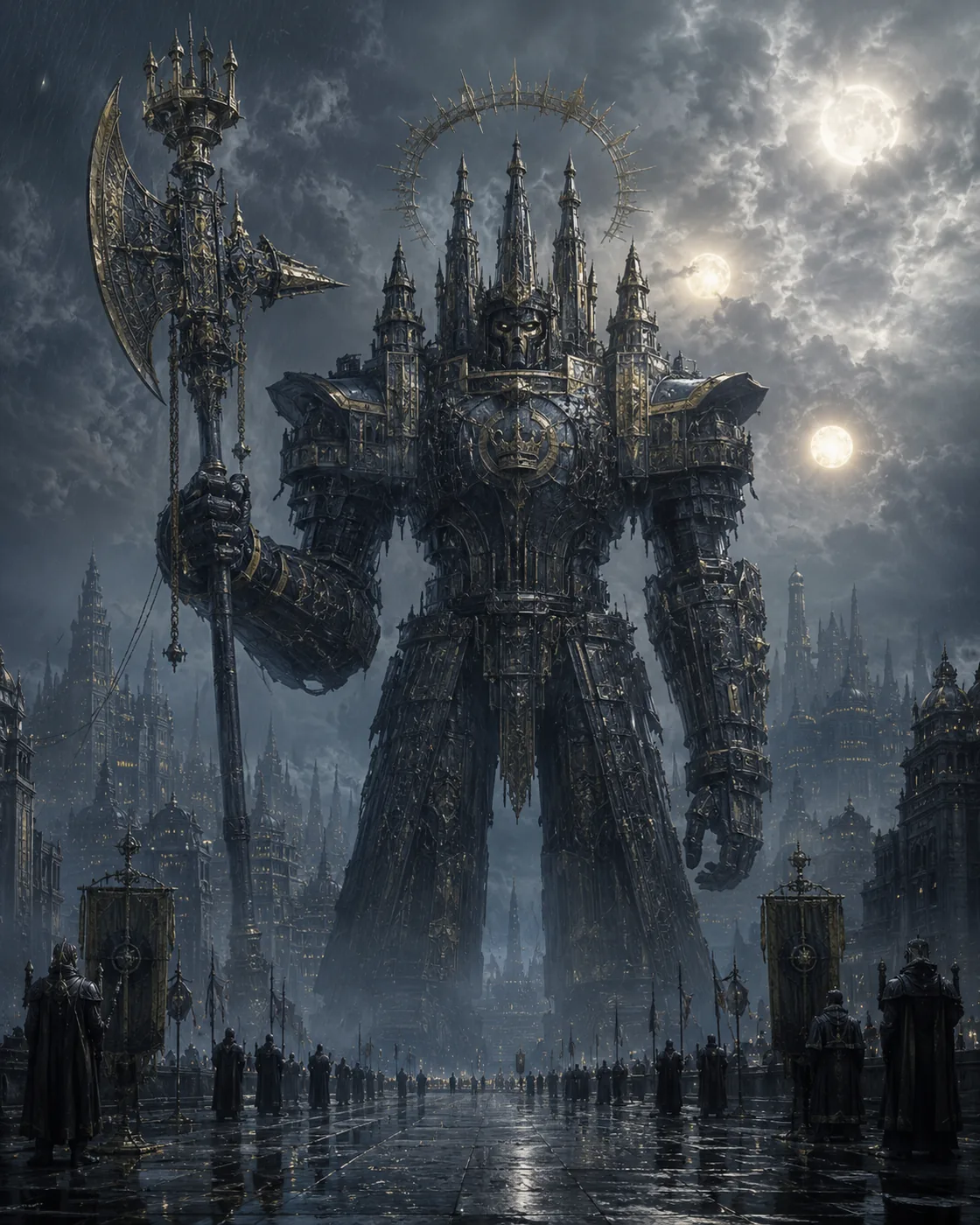
Crownbreaker
Foundation visual anchor
Think: ancient weight, public awe, sovereign scale, and the question of whether overwhelming force can be made protective.
The Celestial Mandate is built from recurring images: roads in rain, sealed records, old banners, courtroom metal, Titan silhouettes, lamps over ledgers, and colors that tell you which kind of power has entered the room.
This atlas is not the full visual bible. It is the public layer that helps a reader turn prose into mental cinema without opening hidden fates, final transfers, or deep chronology.
When a Titan appears in the books, it is rarely just a machine. It is an argument about who may command, surrender, inherit, punish, or be believed.
Foundation visual anchor
Think: ancient weight, public awe, sovereign scale, and the question of whether overwhelming force can be made protective.
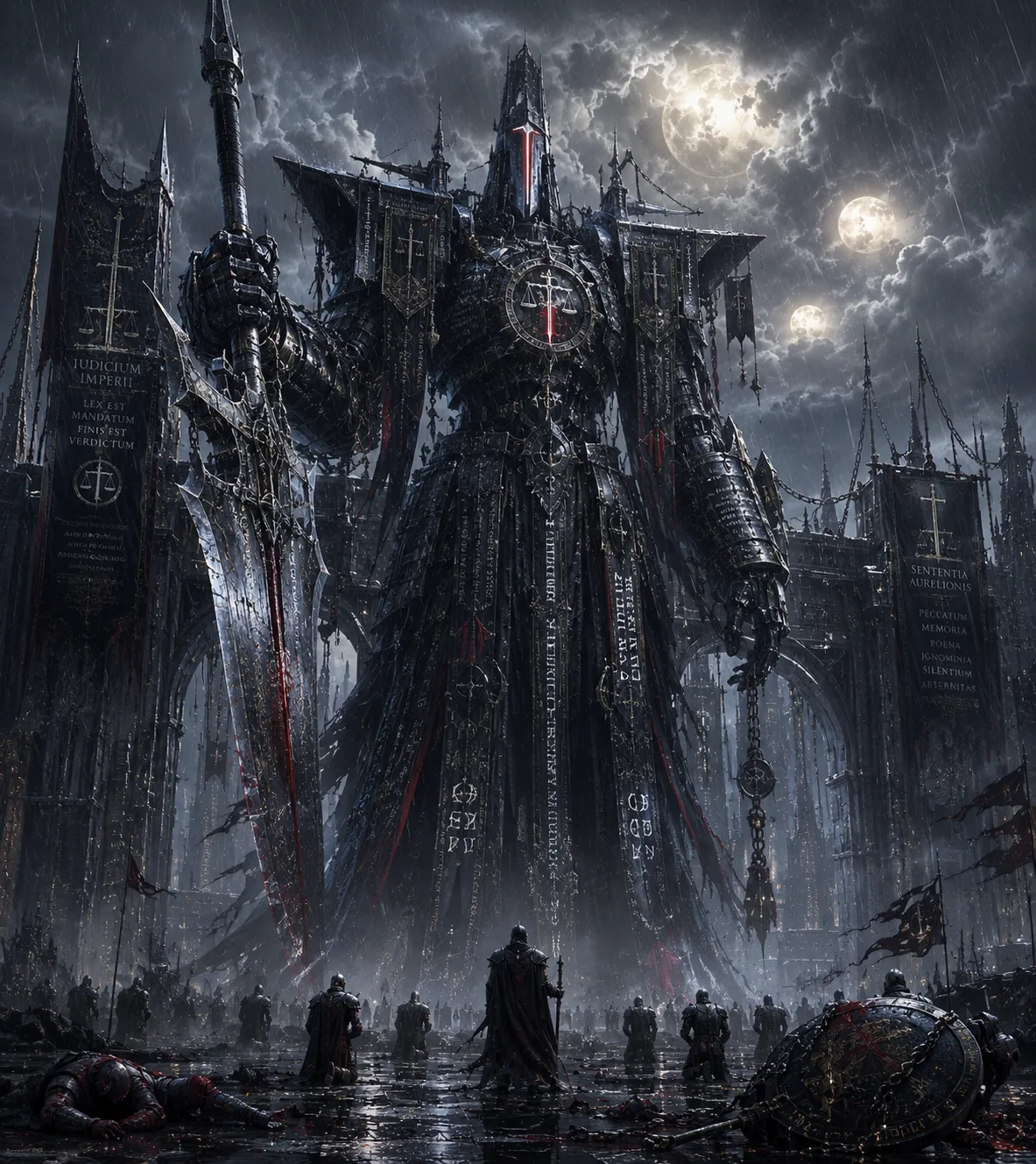
Judgment visual anchor
Think: court, sentence, siege, old legitimacy, and punishment dressed as lawful order.
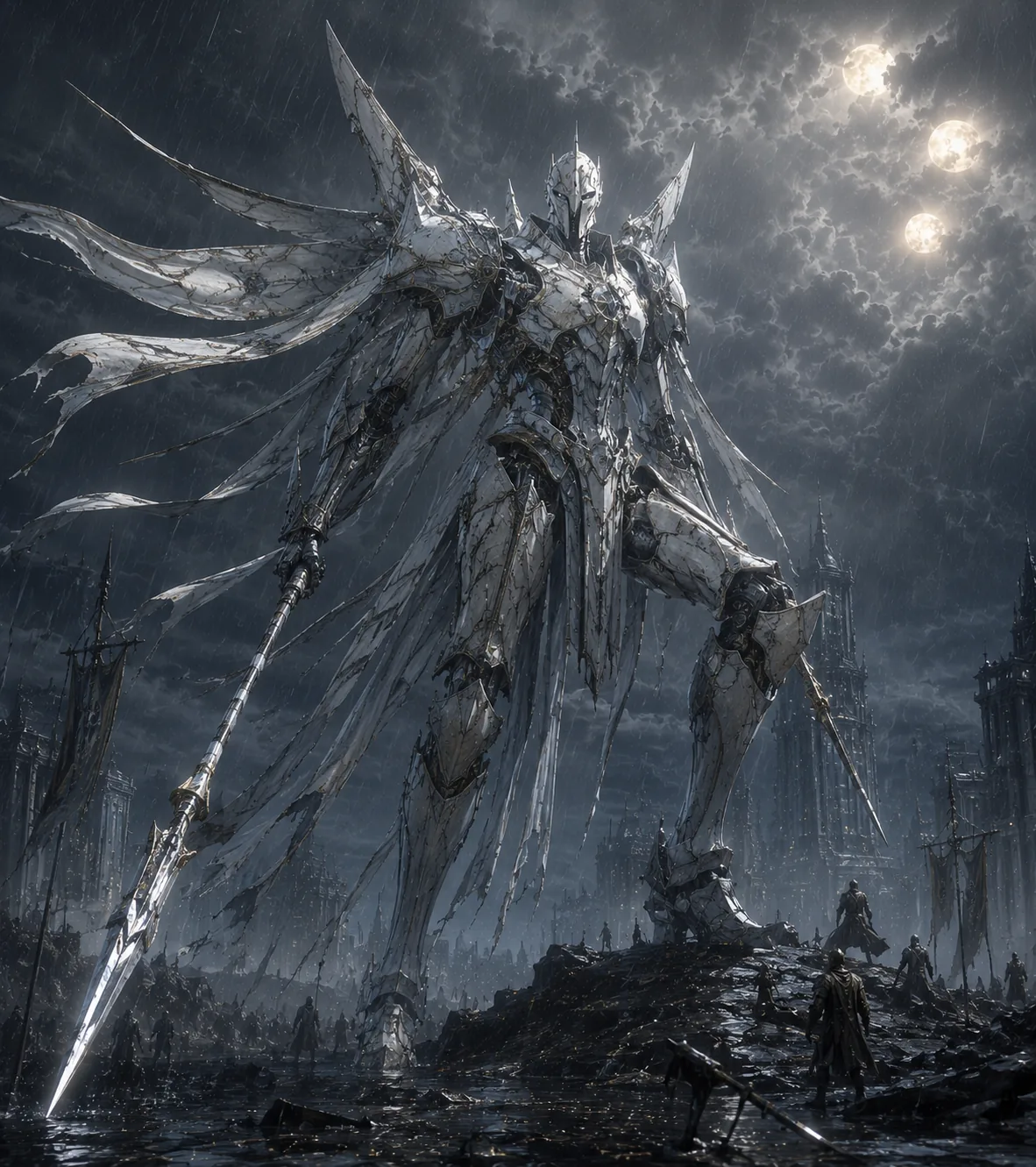
Motion visual anchor
Think: rescue, speed, fragile claim, white metal against rain, and a lawful name moving faster than armies.
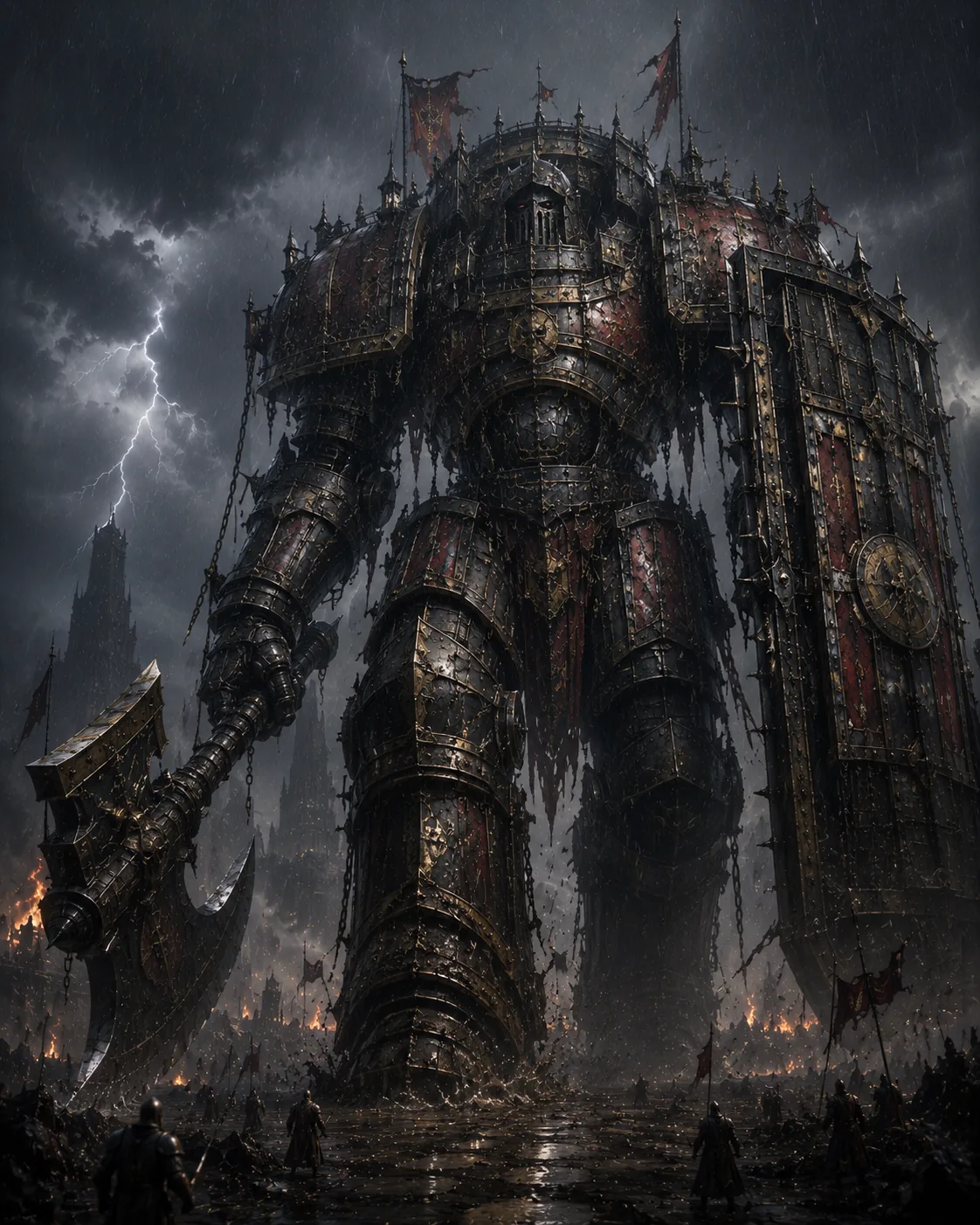
Conquest visual anchor
Think: unbreakable advance, Maddoc's burden, battlefield pressure, shield-wall weight, and violence that feels less like speed than inevitability.
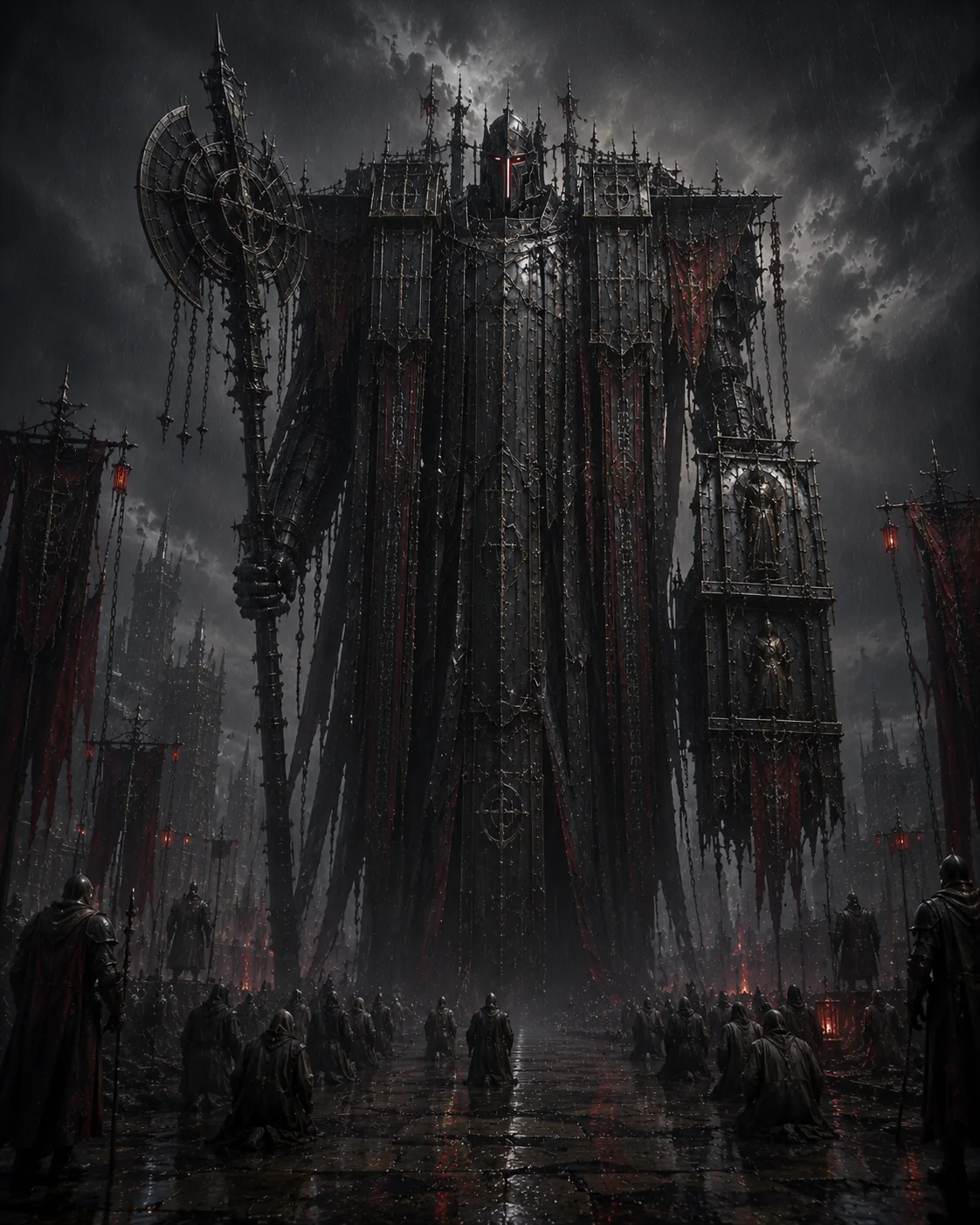
Suppression visual anchor
Think: state violence, doctrine, red civic lamps, kneeling streets, and the fear of law arriving as ceremony.
Visual anchors are public art direction aids, not complete registry entries. Full ownership chains and hidden fates remain protected.
Some images are useful because they show opposition, not outcome. Crownbreaker and Black Verdict should feel like two different claims about law: protection under terrible force, and judgment as old sovereignty.
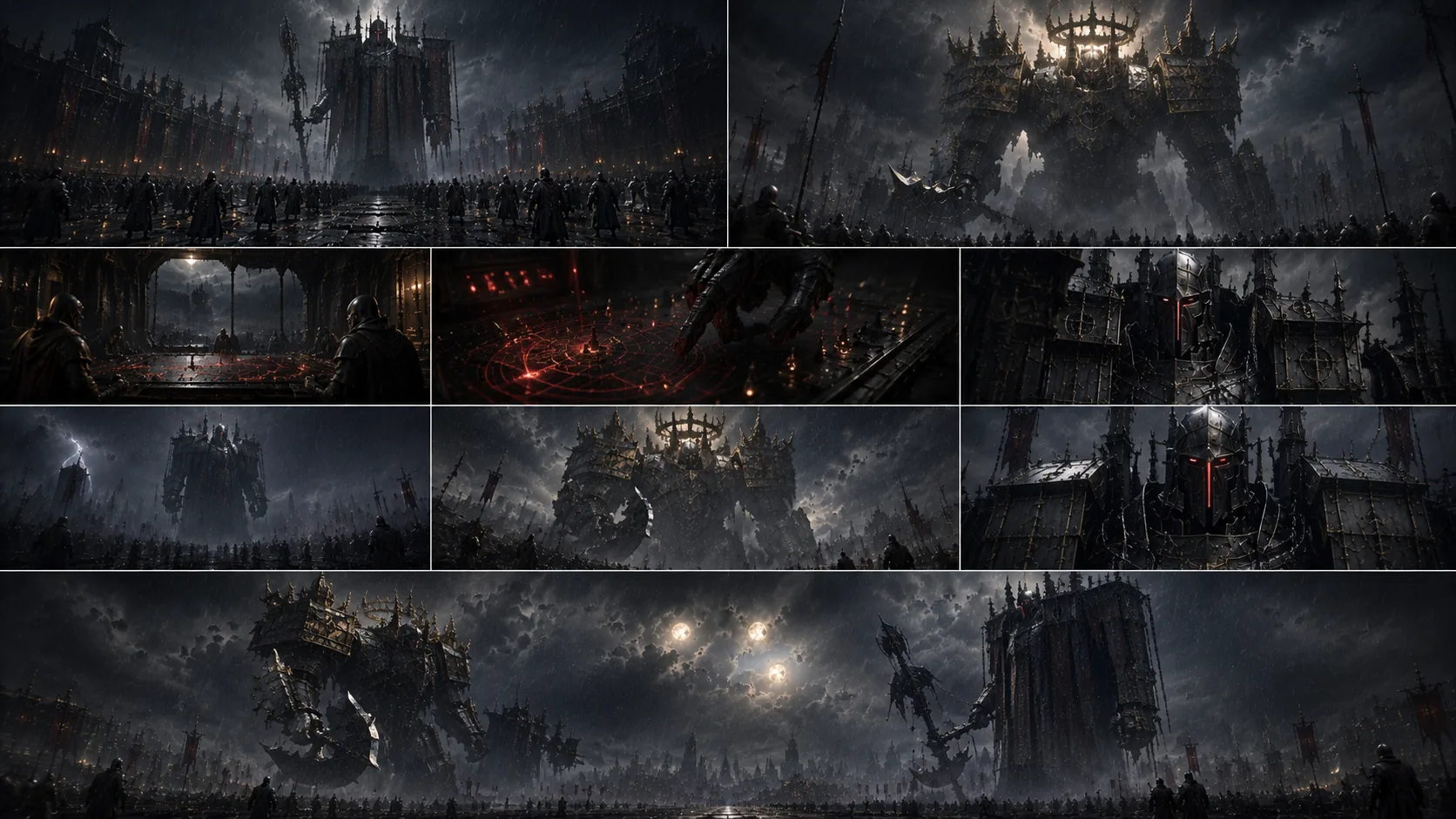
Foundation opposition board
Use this while reading the Foundation Era: not as a solved battle diagram, but as a visual contrast between a Titan that becomes public protection and a Titan that embodies old judgment.
These are spoiler-safe reader cues. They help you feel the difference between houses, regimes, refuges, and institutions before the full canon heraldry is published.
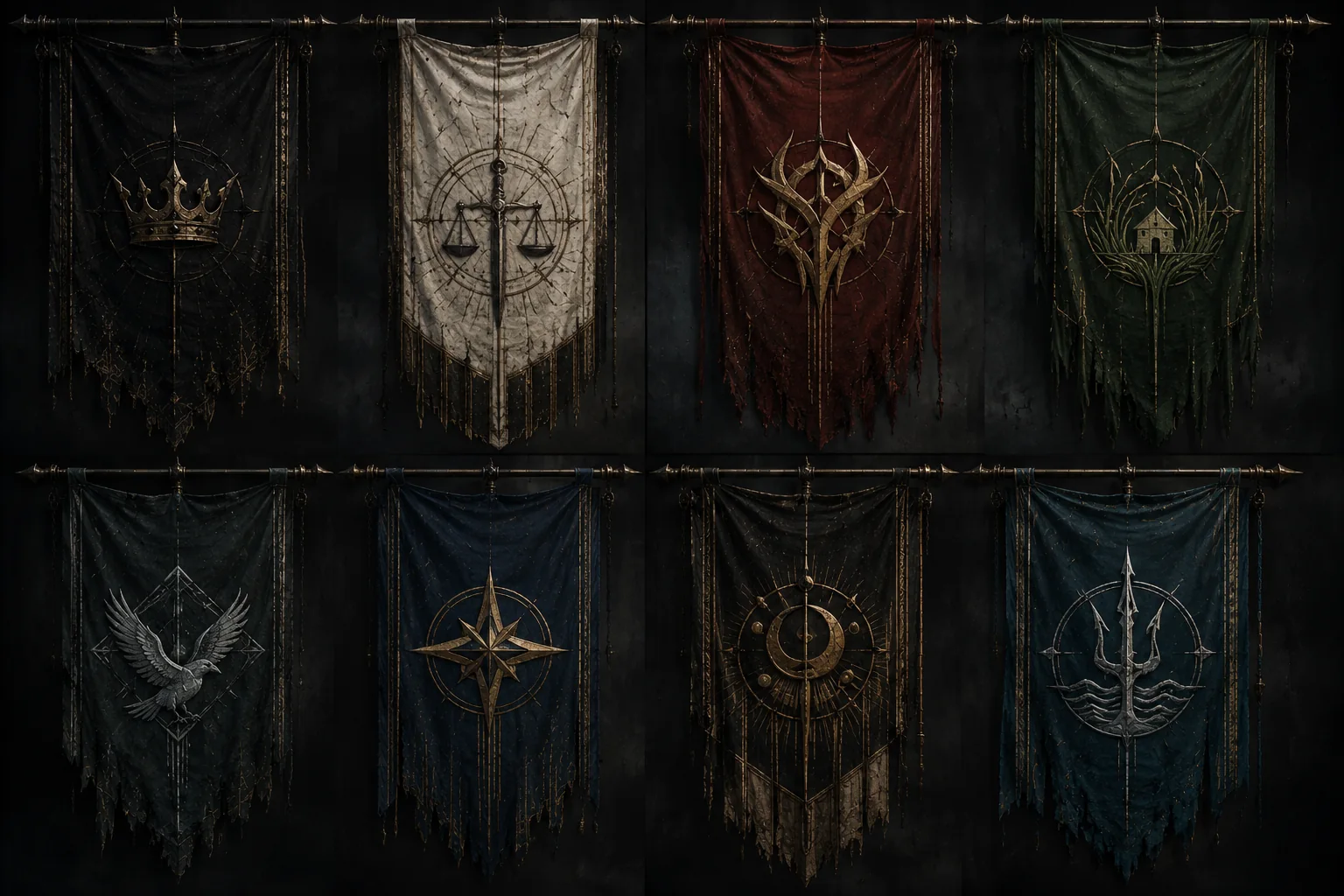
Reader color memory guide
This is not a final heraldry sheet. Use it as a public reading aid: black judgment, white law, red conquest, marsh refuge, iron custody, lantern design, and sea power should feel different before the full canon atlas opens.
The saga returns to objects because institutions need handles: things a person can carry, seal, steal, burn, hide, inherit, or refuse.
A locked memory whose danger is not only what it contains, but who gets to decide whether it stays closed.
Law forced downward into testimony: a document that refuses to become a banner because it wants readers to look at the ground.
A sign that turns distance into memory. Roads carry armies, fugitives, orders, and names that should have vanished.
A quiet light over the design table: the place where victory is measured against the future it will create.
Some of the most dangerous objects in the saga are not blades or Titans. They are records that decide whether a person is property, witness, fugitive, or proof.
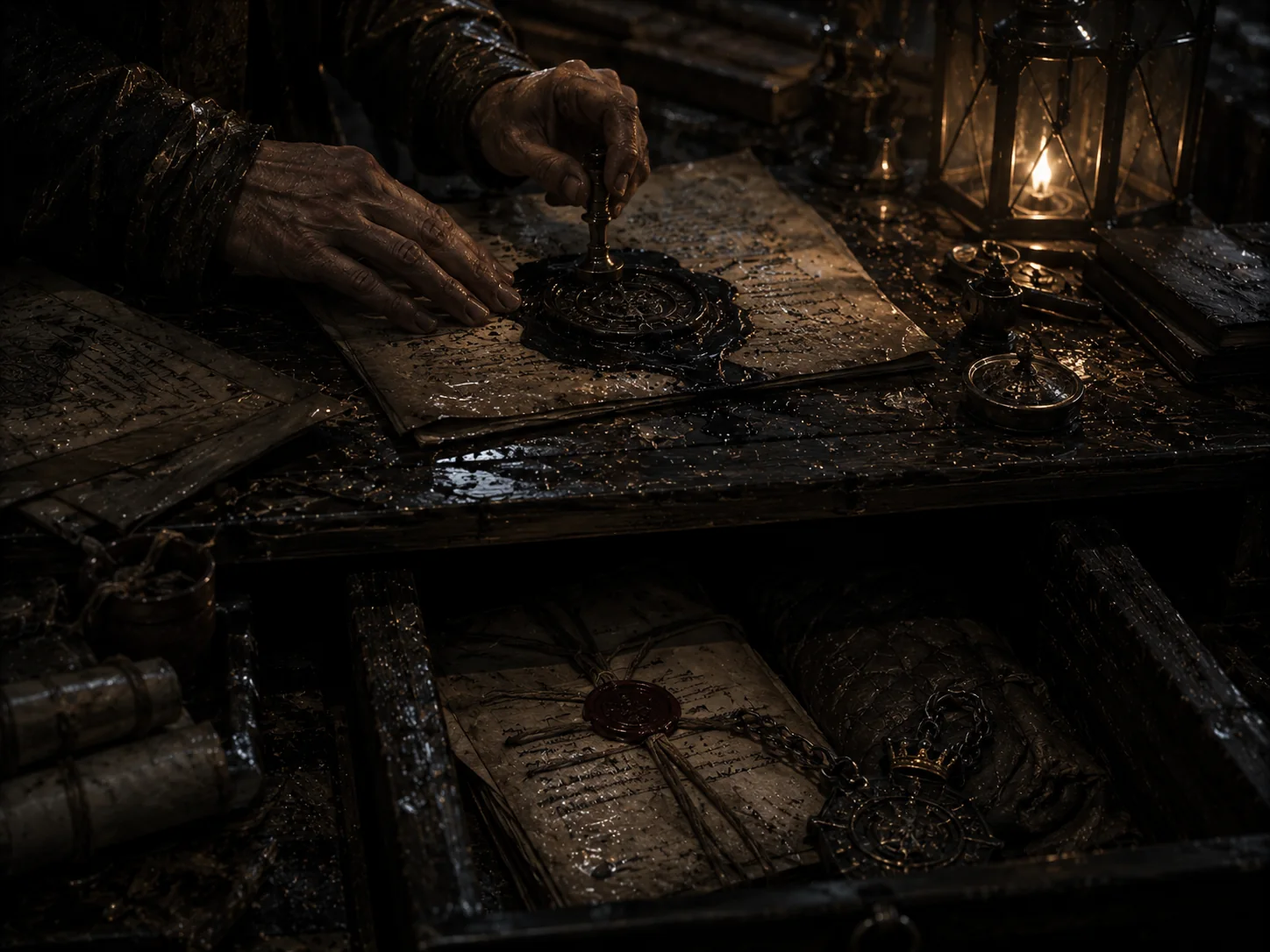
Record visual anchor
Use this image for the Outlaw Era's legal dread: the official page above the table, the buried testimony below it, and the moment when paper becomes harder to silence than a body.
Architect imagery should feel quieter than battle and more dangerous than ornament: maps, lamps, seals, engineering plans, and the knowledge that today's victory will become tomorrow's law.
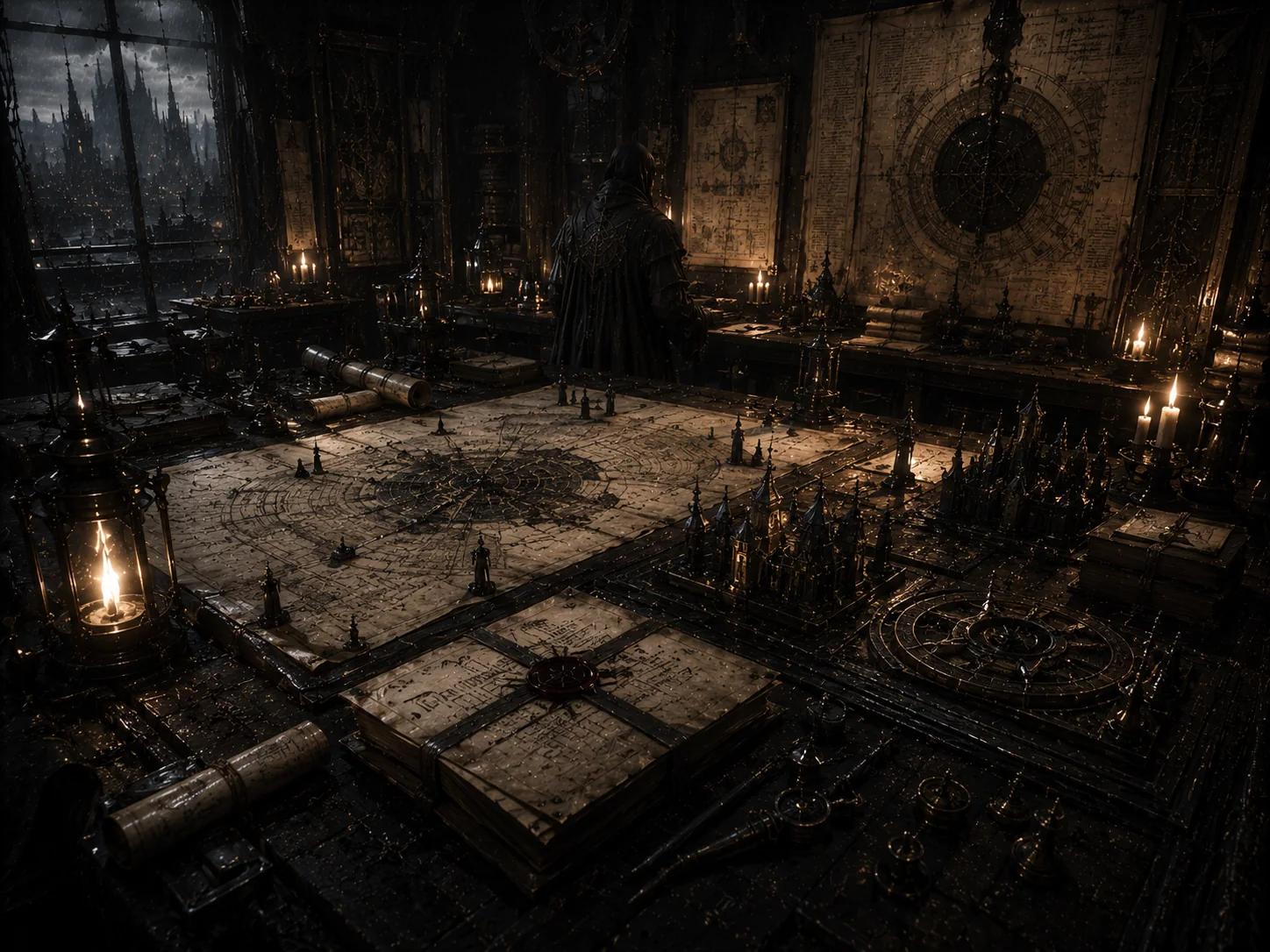
Institutional visual anchor
Use this for Lume and Architect scenes: the saga's design minds do not only win battles. They decide what kind of office, memory, and future the victory will leave behind.
Outlaws should look smaller than founding war, but not less important. The danger is administrative; the answer is human record-keeping under rain and fear.
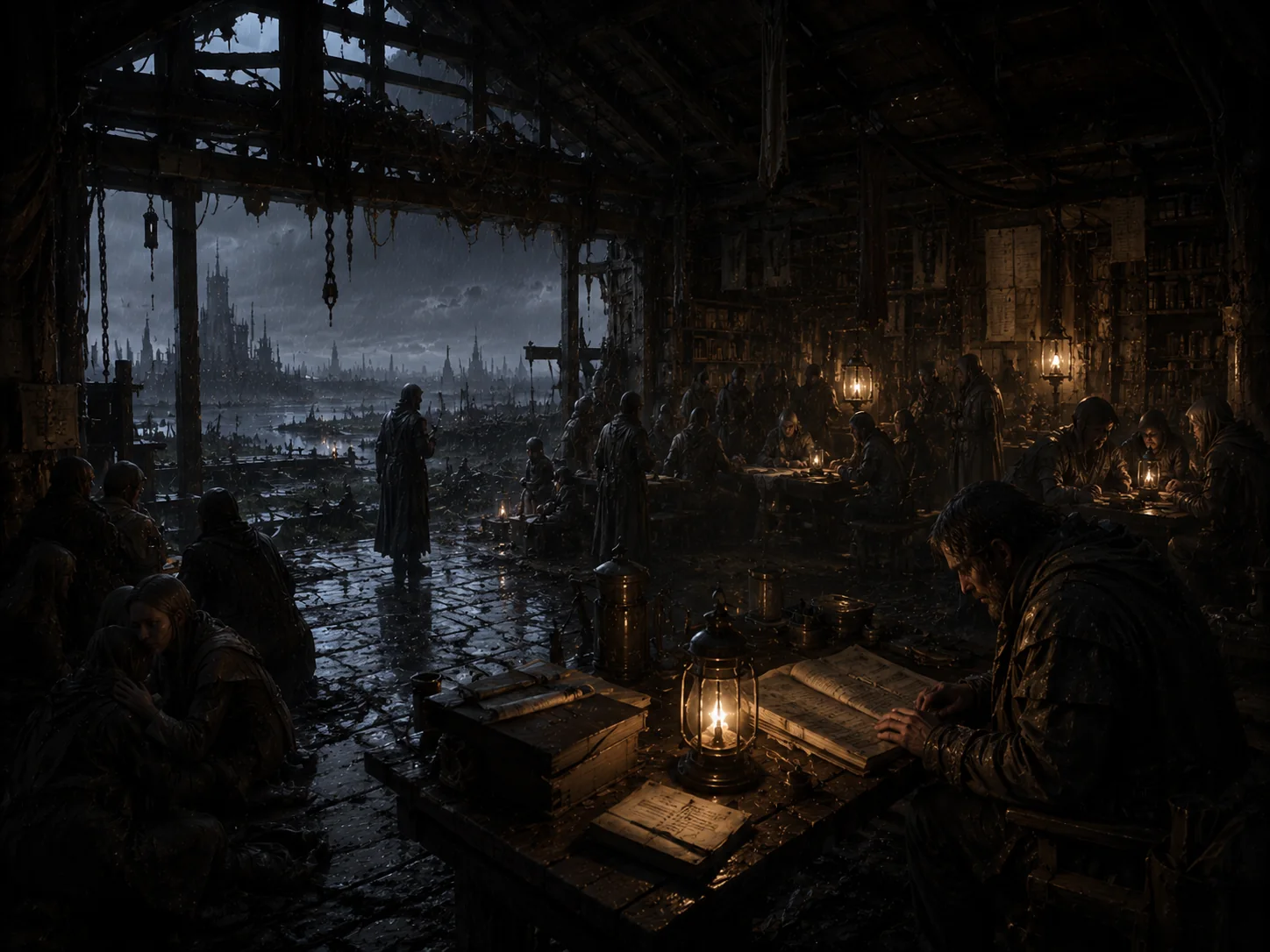
Outlaw visual anchor
Use this image while reading the Outlaw Era: the saga's history is not only made by rulers and Titans, but by people keeping names alive in rooms the official archive does not control.
The founding age should not look like a clean coronation. It should look like a war trying to become public order under witnesses who know what violence has cost.
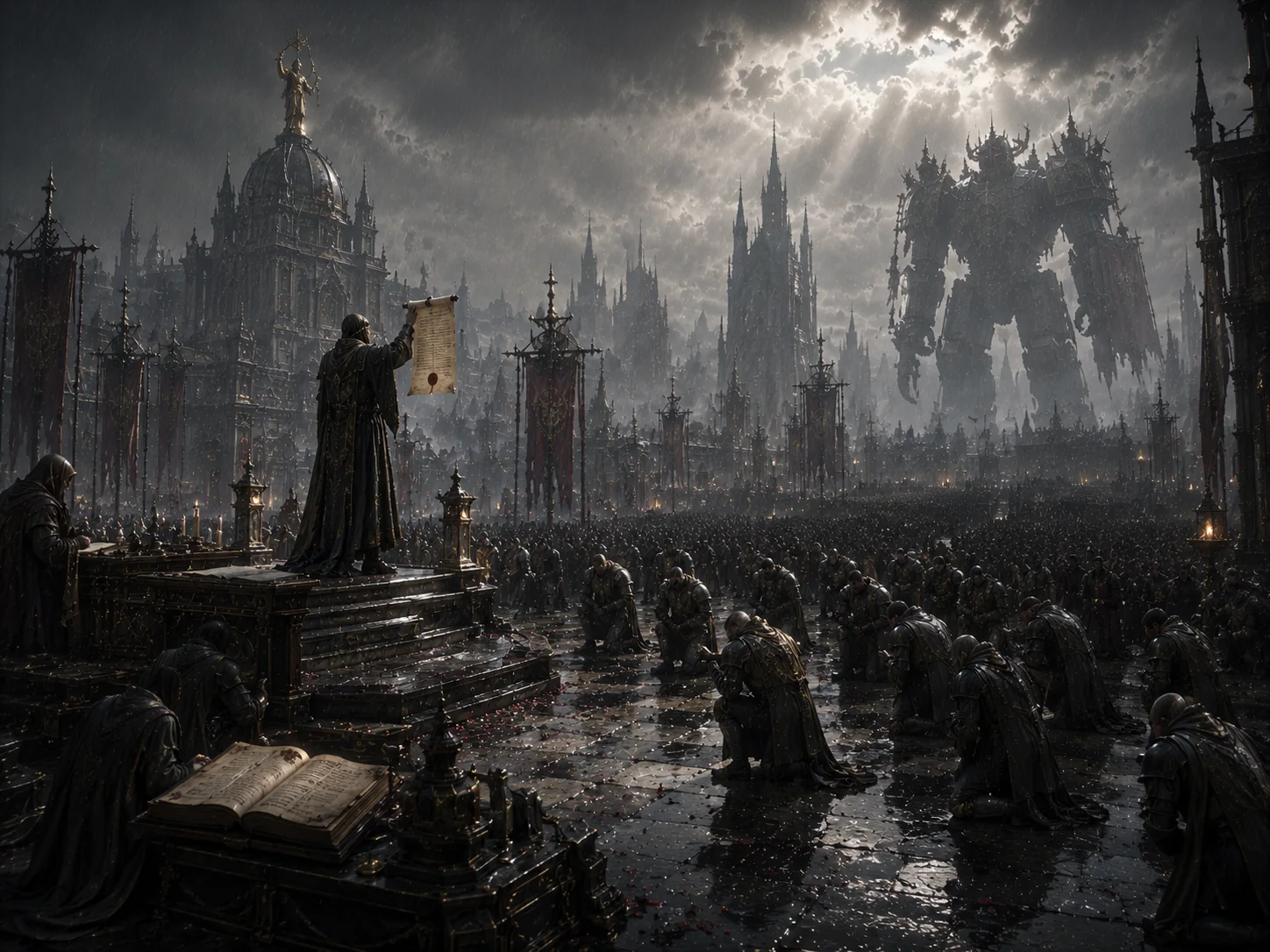
Foundation visual anchor
Use this image for the moment when the saga's central question becomes visible: can power become law without hiding the force that made it possible?
When the prose gives you a house, a Titan, a sealed document, a court, or a road, return here for the public visual cue. The image should make the next chapter easier to see, not explain the ending before you reach it.